 Netherlands Hub
In the 1980s, the Dutch national team found itself in a period of transition. After the legendary successes of the 1970s, including the World Cup final in 1974 and the European Championship in 1988, there was a need for a new generation of players. The disappointments following the lost final against West Germany in 1974 and the failed qualification for the 1976 European Championship had left their mark. This led to a time of self-reflection and renewal.
During this time, young stars emerged, such as Ruud Gullit, Marco van Basten, and Frank Rijkaard. These players were not only technically skilled but also brought a new energy and vision to the team. Under the guidance of coach Rinus Michels, who had led the team to great success in the 1970s, work began again on a winning concept. Michels’ experience combined with the determination of this new generation created a combination that placed the Dutch national team back on the world map.
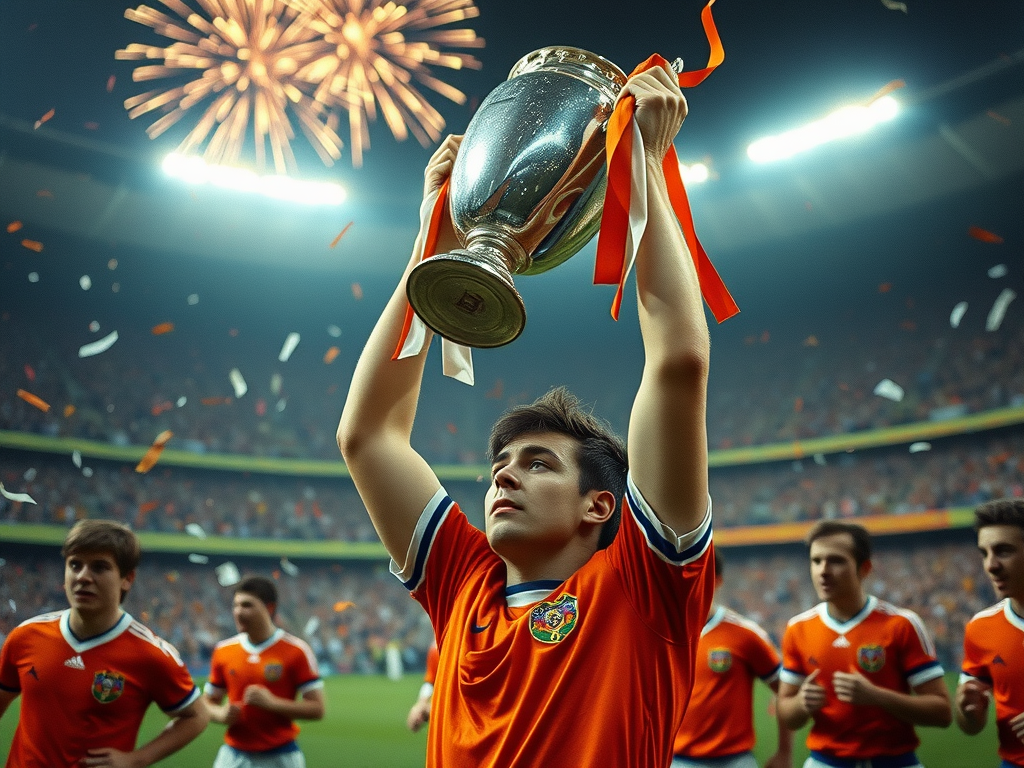
One of the most memorable moments of this period was the triumph at the 1988 European Championship. The Netherlands not only overcame strong teams but did so in a spectacular way. The final against the Soviet Union in Munich remains one of the most iconic matches in Dutch football history. Van Basten's legendary goal, a stunning shot from a tight angle, is often remembered as one of the most beautiful goals ever scored in a final. The tournament marked the pinnacle of the resurgence of the Dutch national team.
The 1980s were also a time of renewed rivalry and passion. Matches against countries like Germany and England were laden with emotion and pressure. Fans began to attend matches in droves, and the color orange became a symbol of pride. This led to a strong bond between the team and its supporters, who longed for the glory days of the past.
With the rise of this new generation and the successes they achieved, the Dutch national team became not only a force to be reckoned with in Europe but also an inspiring example for future generations. The combination of talent, team spirit, and the unforgettable moments of the 1988 European Championship remain an important part of Dutch football culture to this day. As we look forward to the 2026 World Cup, we can only hope that the current generation can evoke the same magic as that of the 1980s.